Why Basement Waterproofing NJ Is Essential in High-Moisture Areas
@lorenzohjsg508
September 24, 2026 · 13 min read
Anyone who has owned a home in New Jersey long enough has seen what moisture can do. It starts quietly. A faint musty smell after a week of rain. A thin white film on a basement wall. Cardboard boxes that feel soft underneath. Then the problem announces itself more clearly, a damp floor near the foundation, peeling paint, mildew on stored furniture, or water showing up where it has no business being.
In high-moisture areas, those early signs are not cosmetic annoyances. They are warnings. Water pressure around a foundation builds gradually, and once it finds a path, it keeps using it. That is why Basement Waterproofing NJ is not just a nice upgrade for cautious homeowners. In many parts of the state, it is a practical necessity tied directly to property value, indoor air quality, structural durability, and day-to-day livability.
New Jersey has the exact mix of conditions that make basements vulnerable. There is seasonal heavy rain, humid summers, freeze-thaw cycles in winter, older housing stock in many towns, and a lot of neighborhoods with drainage patterns that are less than ideal. Some homes sit on lots where runoff naturally collects. Others have clay-rich soil that holds water against the foundation. Even newer homes can have moisture problems when grading settles or gutters discharge too close to the house.
The common assumption is that basement water only matters if there is standing flooding. In practice, chronic dampness causes just as much trouble over time. Moisture does not need to rise to ankle level to damage framing, encourage mold growth, rust appliances, warp finishes, and make the lower level feel unusable. A basement that is technically dry enough to walk through can still be wet enough to cause expensive long-term damage.
Why New Jersey basements take such a beating
A basement exists below grade, surrounded on several sides by soil. That means it is constantly exposed to whatever is happening in the ground outside. After a long rain, the soil becomes saturated and presses moisture against the foundation walls and footing. This creates hydrostatic pressure, which is simply water pushing where it wants to go. Concrete and masonry may look solid, but they are porous materials. Given enough time and pressure, water vapor and liquid water move through them.
That reality is especially important in New Jersey because local conditions vary a lot from county to county, but many areas share one trait: persistent moisture. Coastal regions deal with elevated humidity and sometimes high water tables. Inland areas with poor drainage can stay soggy for days after storms. In older neighborhoods, decades of settling may have changed the way water flows across a property. What worked for the house twenty years ago may not work now.
I have seen basements in northern New Jersey where the owner only noticed trouble after several winters of freeze-thaw movement widened hairline cracks. I have seen homes in central parts of the state where the sump pump was doing its job, but the basement still smelled damp because humidity was entering through the walls. In southern areas, properties near low-lying ground often deal with water collecting near the foundation after every hard storm. The pattern changes, but the result is familiar: moisture finds the weak points.
A lot of homeowners underestimate how aggressively water behaves underground. Roof leaks are dramatic and visible. Foundation moisture is slower and easier to ignore. That is part of what makes it costly. By the time damage is obvious, the underlying issue has usually been present for a while.
The hidden costs of waiting
People often delay waterproofing because the basement is unfinished, used mostly for storage, or visited only a few times a week. That logic makes sense on the surface, but it tends to fail under real-world conditions. Moisture in a basement does not stay politely confined to the basement.
The first cost is usually air quality. Basements are connected to the rest of the house more than most people realize. Air moves upward. When the lower level is damp, that moisture-laden air, along with odors and mold spores, can circulate into living areas. Homeowners sometimes think they have a bathroom ventilation problem or an HVAC issue upstairs when the real source is below them.
The second cost is structural wear. Wood framing, sill plates, and support members do not respond well to chronic dampness. Neither do metal components. A little corrosion on a furnace base or water heater may not seem urgent until replacement is suddenly necessary years earlier than expected. Flooring adhesives fail. Drywall wicks moisture. Paint bubbles. Efflorescence, that chalky residue on masonry, is not just ugly. It is evidence that water is moving through the material and leaving mineral deposits behind.
The third cost is lost use of space. Many New Jersey homeowners want their basements to serve a purpose, whether that means storage, a laundry area, a workout room, a rec room, or finished living space. None of those uses work well in a damp environment. Even if water only shows up once or twice a year, the uncertainty changes how people use the space. They stop storing anything valuable there. They avoid investing in improvements. They live around the problem.
Then there is resale. Buyers notice basement moisture quickly, and inspectors are trained to look for the subtle signs. A dehumidifier running nonstop, fresh paint on one wall, staining near the cove joint, or a musty odor after rain can raise concerns immediately. Sellers sometimes discover too late that a manageable issue has become a negotiation problem.
Waterproofing is not one product, it is a system
One reason people get confused about Basement Waterproofing NJ is that the term covers several different strategies. There is no universal fix that works for every basement. Waterproofing succeeds when the solution matches the actual source of water entry and the conditions around the home.
Sometimes the core issue is exterior water management. A house may have short downspouts that dump roof runoff right beside the foundation. The soil may slope toward the house instead of away from it. Mulch beds can trap moisture along the wall. In cases like that, interior work alone may help but not fully solve the problem.
Other times, the house needs an interior drainage system because water is rising under the slab or entering at the wall-floor joint. In older homes, foundation cracks may need repair. In basements with consistently high humidity but no major water intrusion, vapor control and dehumidification may be the real priority. A sump pump can be essential in one home and unnecessary in another.
This is where experience matters. A contractor who treats every damp basement the same often misses the bigger picture. The right approach is diagnostic first. Where is the water coming from? Is it entering during heavy storms, all year, only in spring, or only after snowmelt? Is the moisture visible as seepage, or is the problem mostly condensation and humidity? Has the property grading changed? Are there plumbing issues that mimic groundwater intrusion?
A proper waterproofing plan typically combines several layers of protection rather than relying on a single product. That may include drainage corrections outside, crack injection or patching, an interior drain channel, a sump system with battery backup, wall vapor barriers, and humidity control. The best systems look almost boring once installed. That is usually a good sign. Waterproofing should quietly do its job in the background.
Why high-moisture areas demand a faster response
In drier regions, a small basement issue might remain a minor nuisance for years. In a high-moisture environment, conditions compound the problem. Frequent rain events mean less time for the soil around the foundation to dry out. Humid summer air makes it harder for the basement to shed moisture naturally. Winter can enlarge cracks and create fresh pathways for seepage. If the water table is high, pressure may remain constant even between storms.
That combination changes the timeline. A home that gets away with minimal prevention in a lower-moisture climate can struggle badly in New Jersey. This is especially true for homes with older block foundations, stone foundations, or additions where old and new foundation sections meet. Those transition points often behave differently under moisture load.
There is also a practical point that homeowners learn after a few storms: emergency mitigation is always more disruptive and more expensive than prevention. Pulling out wet carpet, replacing damaged storage, drying framing, and dealing with mold remediation is not just costly. It is exhausting. Most people who have dealt with even one significant basement water event become much more serious about prevention afterward.
Common warning signs homeowners should not ignore
Most basements do not jump straight from dry to flooded. They send signals first. Paying attention to them can save a lot of money and frustration.
- A persistent musty odor, especially after rain
- White mineral deposits on concrete or masonry walls
- Peeling paint, stained baseboards, or warped trim
- Condensation on pipes, walls, or windows beyond normal seasonal levels
- Rust on appliances, fasteners, or metal shelving in the basement
None of these signs automatically means severe water intrusion, but each points to excess moisture. The goal is not to panic over every damp smell. It is to investigate early, while the scope of work is still manageable.
The difference between damp-proofing and real waterproofing
This distinction causes a lot of confusion, especially during home purchases. Many foundations have some form of exterior coating applied during construction. Homeowners understandably assume that means the basement is waterproofed. Often, it does not.
Damp-proofing generally refers to a basic barrier intended to resist soil moisture under ordinary conditions. It is not designed to handle significant hydrostatic pressure or active water movement. Waterproofing, in the more complete sense, involves systems built to manage and redirect water before it causes interior damage.
That distinction matters because a basement can have a standard exterior coating and still leak. I have heard owners say, "But the house was waterproofed when it was built." What they usually mean is that it was built with minimal moisture protection, which is standard. That is very different from a robust system designed for a property with recurring water issues.
Finished basements raise the stakes
Once a basement is finished, moisture stops being just a building-envelope problem and becomes a renovation protection problem. Insulation, drywall, flooring, trim, furniture, and electronics all raise the financial risk. Waterproofing after a basement is finished is still possible, but it often means partial demolition, dust, schedule delays, and difficult choices about what can be saved.
In high-moisture parts of New Jersey, it makes far more sense to address water control before a finishing project begins. That includes stress-testing assumptions. A basement that has "never flooded" is not automatically ready for flooring and drywall. Ask better questions. Has it stayed dry through multi-day storms? Through spring thaw? Through power outages if the sump system depends on electricity? Those details matter more than a casual visual check on a sunny afternoon.
Finished basements also tend to hide early warning signs. Once walls are covered and storage is neatly arranged, moisture can build quietly behind materials. By the time damage appears on the surface, mold or rot may already be established.
Not every wet basement needs excavation
Homeowners sometimes avoid calling a professional because they picture a massive project involving trenching around the whole house. Full exterior excavation does have a place, particularly when walls are failing, exterior membranes have completely failed, or access conditions make outside correction the smartest option. But many effective solutions are less invasive.
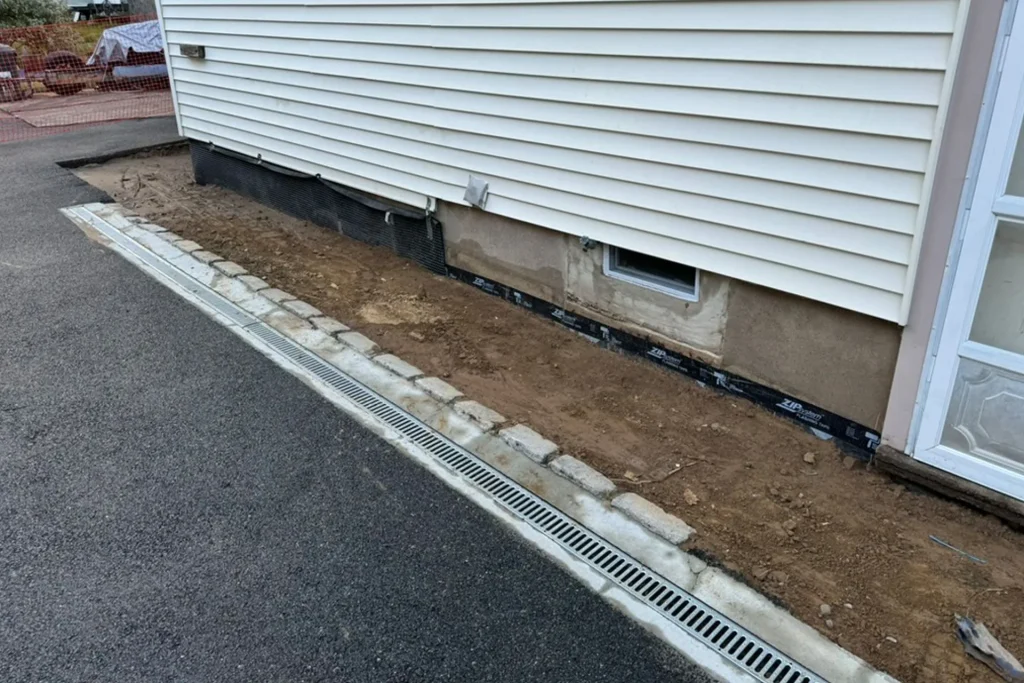
Interior perimeter drainage systems are common because they relieve pressure and direct water to a sump basin before it reaches the basement floor. Crack injection can seal certain non-structural foundation cracks effectively. Extensions on downspouts, grading corrections, and targeted exterior drainage improvements can make a surprising difference when runoff is the main culprit.
That said, there is a trade-off. Less invasive does not automatically mean better. If a home has severe exterior water loading, an interior system may manage https://angelovrqd427.evercolumn.com/posts/basement-waterproofing-nj-solutions-for-cracks-in-foundation-walls the symptoms without reducing exposure at the wall. A thoughtful plan weighs disruption, cost, long-term performance, maintenance needs, and the specific way water behaves on that property.
Choosing a contractor requires more than comparing prices
Because waterproofing is technical and often invisible once completed, homeowners can struggle to compare proposals. One bid may seem much cheaper simply because it leaves out critical elements. Another may push a large system when simple exterior corrections would solve most of the issue.
A reliable evaluation should include inspection of both the basement interior and the exterior drainage conditions. The contractor should ask detailed questions about timing, weather patterns, previous repairs, and how often the issue occurs. Vague recommendations are a red flag. So is a one-size-fits-all sales pitch.
When discussing Basement Waterproofing NJ, local familiarity matters. Soil behavior, storm intensity, housing age, and construction styles vary regionally. A contractor who understands common New Jersey foundation types and moisture patterns will usually diagnose problems more accurately than someone relying on generic assumptions.
Ask practical questions. What maintenance will the system require? What happens during a power outage? Is there a battery backup option? Will the discharge point work in winter? How will the work affect finished surfaces? A good professional should answer these clearly, without leaning on jargon.
Maintenance still matters after the job is done
Even the best waterproofing system is not something you install and forget forever. Water management around a home needs occasional attention, especially in a climate with heavy seasonal swings.
- Clean gutters and confirm downspouts discharge well away from the foundation
- Test sump pumps before storm season and after long periods of inactivity
- Keep grading pitched away from the house as soil and landscaping settle
- Use a dehumidifier when summer humidity remains high
- Watch for new cracks or changes in seepage patterns after major storms
Those habits are simple, but they extend the life of the system and reduce surprises. A sump pump that fails because it was never tested is one of the most preventable basement disasters.
Basement health affects the whole house
People often separate basement issues from the rest of the home because the problem happens below their main living space. Building science does not work that way. Moisture, air movement, and temperature are connected. A wet basement can increase humidity upstairs, burden HVAC equipment, create odors throughout the home, and contribute to allergen problems. It can also make floors above feel colder and less comfortable during winter.
That is why waterproofing often has benefits beyond dryness alone. Families notice the air smells cleaner. Dehumidifiers run less often. Storage feels safer. Renovation plans become realistic. Mechanical equipment lasts longer in a less corrosive environment. The house feels more stable because, in a very real sense, it is.
For homeowners in New Jersey, especially those in neighborhoods known for damp lots, older foundations, or repeated stormwater issues, postponing waterproofing usually means accepting growing risk. Sometimes the damage appears dramatically after one major storm. More often, it accumulates slowly until repair costs are impossible to ignore.
A dry basement is not a luxury feature in a high-moisture area. It is part of responsible home stewardship. Basement Waterproofing NJ protects far more than the lowest level of the house. It protects the structure, the air, the investment, and the confidence that when the next stretch of hard rain arrives, the home is ready for it.
ARD Waterproofing
Address: 98 Smull Ave, West Caldwell, NJ 07006
Phone number: +12016465936
FAQ About Basement Waterproofing NJ
What is the best waterproofing method for a basement?
The best overall approach to waterproofing a basement is a combined exterior and interior system that stops water at the foundation wall and safely manages any moisture that gets through.
What is the average cost to waterproof a basement?
The average cost to waterproof a basement ranges from $2,500 to $15,000, with most homeowners paying around $5,200 for a complete project.
Can a basement be waterproofed from the inside?
Yes, a basement can be waterproofed from the inside, and it is often the most affordable and least disruptive method.